2025.11.27
Outcomes of the JICA Thematic Training Program (In-Country Training in Japan)
Since the mid-2000s, initially with training programs on global warming, OECC has managed a range of climate change–related training programs. Since 2020, OECC has been implementing the thematic training program “Adaptation to Climate Change.”
In FY2025, following approximately two weeks of pre-arrival online distance learning, OECC welcomed a total of 14 participants from 12 countries to Japan and conducted an in-country training program based at JICA Tsukuba Center for about four weeks, from September 29th to October 24th.
Objectives and Structure of the Training
The overall objective of this training program was to ensure that actions are appropriately planned for the formulation or improvement of policies and measures related to climate change adaptation within their jurisdictions. The program is structured with classroom lectures and practical exercises such as group work and discussions, site visits to relevant facilities and initiatives, a domestic study tour, and the preparation and presentation of action plans as the participants’ key outputs.
Training Program: Lectures and Exercises
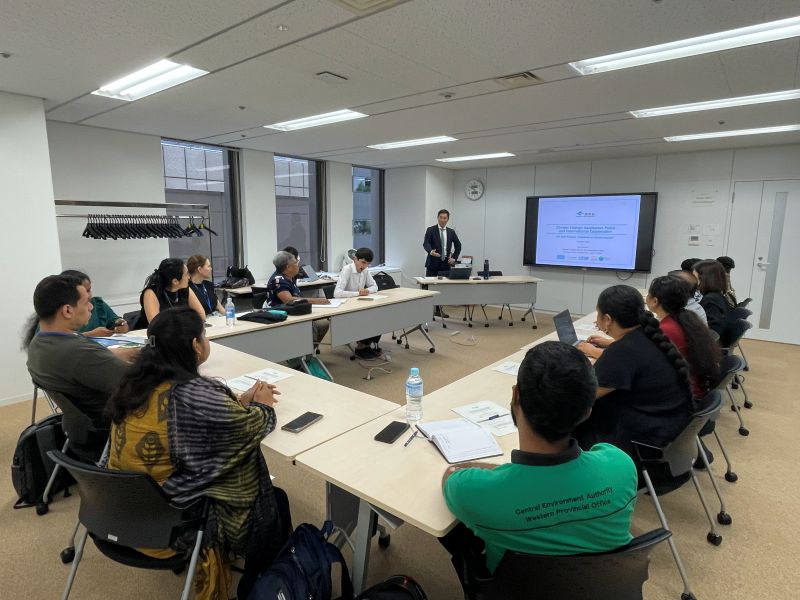
The lecture component began with an introduction to climate change measures implemented by JICA and the Government of Japan, followed by lectures incorporating experiences shared by past participants and reviews of multiple on-demand lectures completed during the online training phase. Through these activities, participants deepened their knowledge of climate change adaptation measures.
In addition, through lectures and exercises (group work) on Project Cycle Management (PCM), participants learned logical and effective problem-solving approaches, which they then applied to the development of their own action plans.
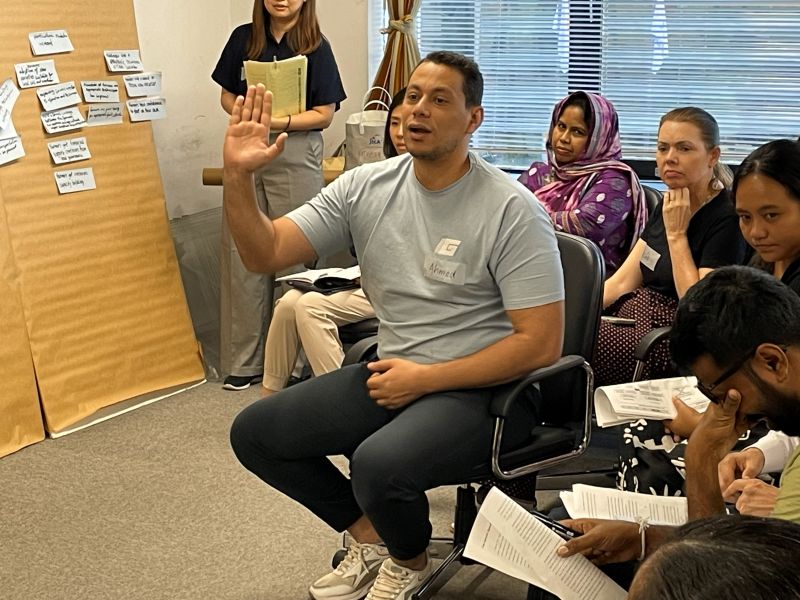
Training Program: Site Visits and Study Tour
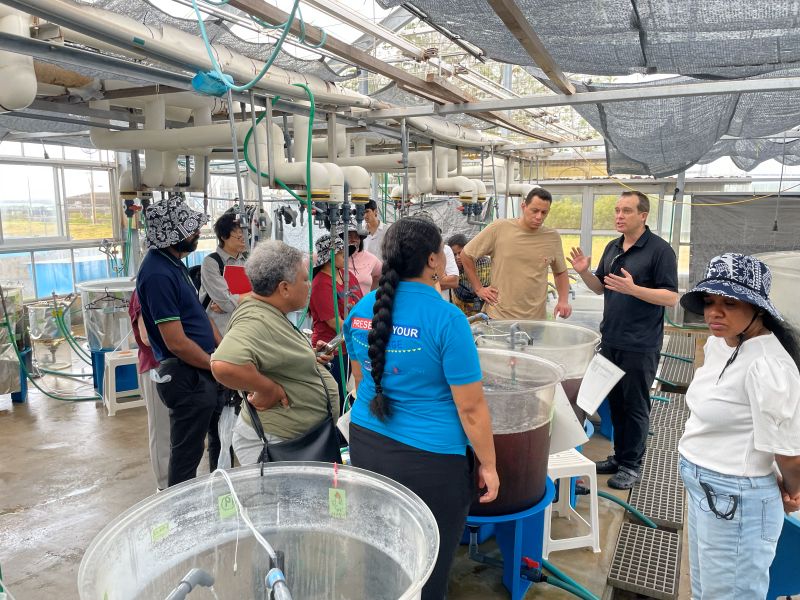
The site visit program took advantage of Tsukuba’s locations with a variety of prestigious institutions. The visit included the National Institute for Environmental Studies, the Meteorological Research Institute, the Forestry and Forest Products Research Institute, and the International Centre for Water Hazard and Risk Management (Public Works Research Institute). These visits provided participants with opportunities to learn about climate change adaptation initiatives, supported by cutting-edge research conducted by leading researchers at those organizations.
In Tokyo, lectures and opinion exchanges were held with officials from the Ministry of the Environment and the Ministry of Agriculture, Forestry and Fisheries. In Saitama Prefecture, participants learned about flood control measures for the Tokyo metropolitan area through infrastructure development by visiting the Metropolitan Area Outer Underground Discharge Channel. A visit to Saitama City was also conducted to learn about climate change measures implemented by local governments.
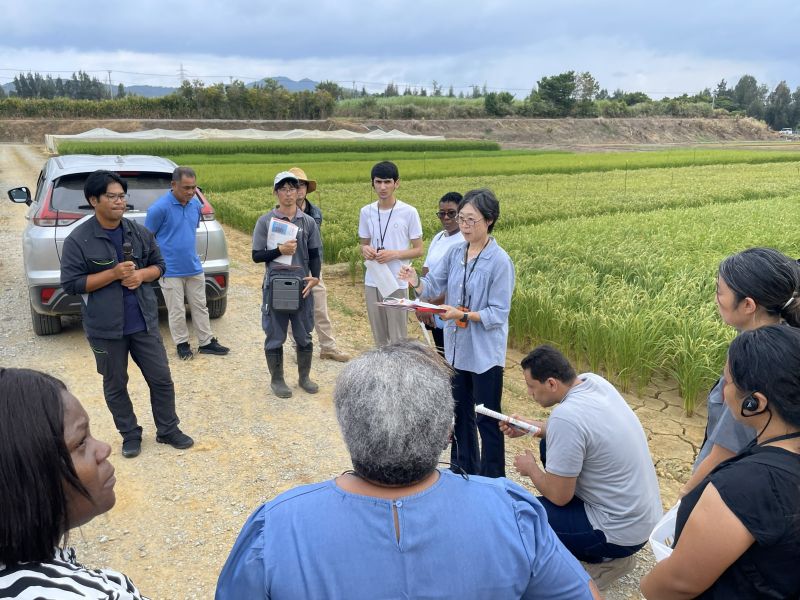
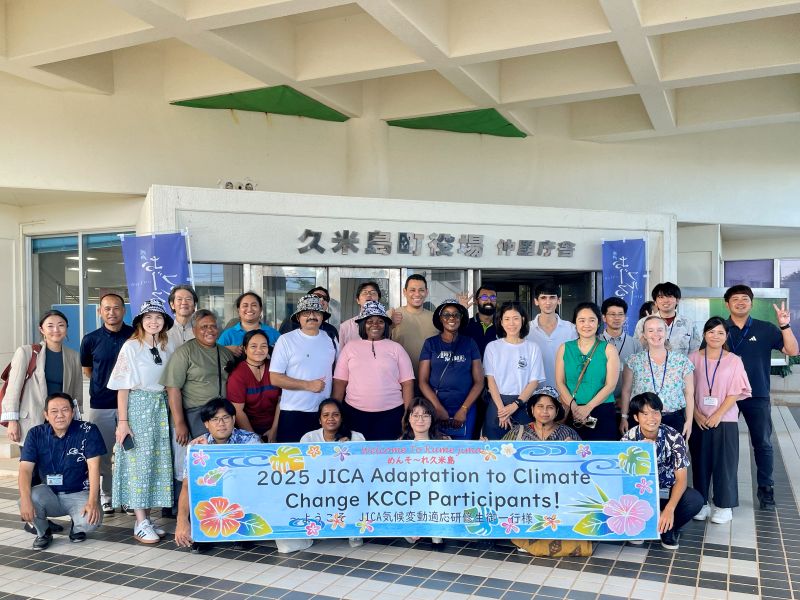
In addition, a study tour to Okinawa and Kumejima Island was organized. Activities included learning about ocean thermal energy conversion (OTEC) and the utilization of deep sea water on Kumejima Island; climate change adaptation measures in the agricultural sector in tropical regions (such as crop variety improvement and cultivation techniques); site visits to observe blue carbon ecosystems; visits to low-carbon emission housing (net-zero energy houses, ZEH); and discussions with university researchers at the Okinawa Institute of Science and Technology Graduate University.
Presentation of Training Outcomes (Action Plans)
In parallel with the lectures and site visits described above, OECC also provided guidance on the development of action plans. OECC staff worked together with each participant to consider initiatives aimed at addressing the specific challenges they face. While offering advice on issue and stakeholder analysis and the selection of solution approaches using methods such as PCM, participants proceeded with the development of their action plans.
Toward the end of the training, participants presented their action plans—including the outcomes of the training—to staff from JICA Headquarters (Global Environment Department), JICA Tsukuba, and others.
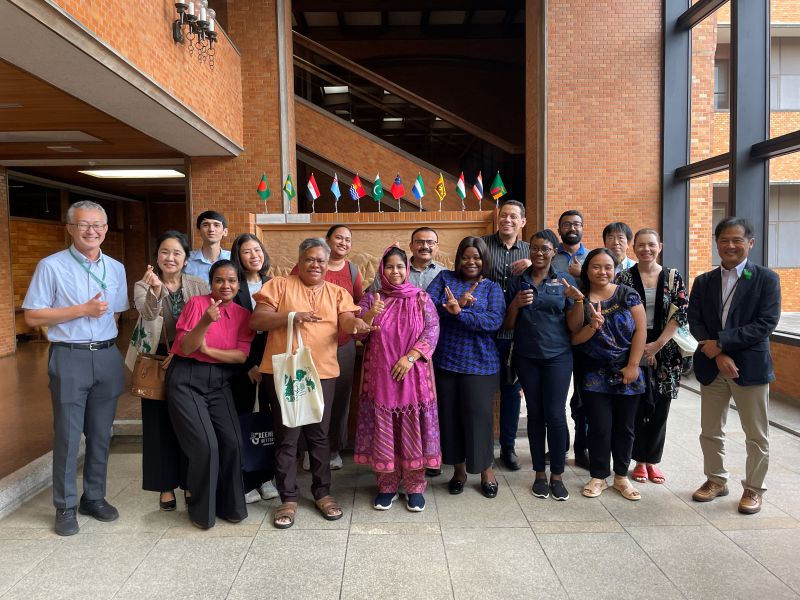
All 14 participants successfully completed the entire training program and received certificates of completion from JICA. The network among the 14 participants has been maintained to this day, enabling ongoing exchanges of information and discussions regarding their respective climate change adaptation initiatives.