2026.03.25
Promoting Institutional Harmonization Regarding Corporate GHG Emissions Calculation and Reporting
The Ministry of the Environment, Japan (MOEJ), the Asian Development Bank Institute (ADBI), and the Asian Development Bank (ADB) held an international workshop in Tokyo in February 2026. This workshop aimed to deepen discussions on institutional harmonization that would help reduce the burden on businesses. The Overseas Environmental Cooperation Center (OECC) was responsible for planning and managing the event.
GHG Emissions Calculation and Reporting
The “PaSTI” initiative, led by MOEJ with OECC serving as the secretariat, supports the promotion of transparency at the corporate and facility-levels by assisting countries in building institutional frameworks.
The measurement and reporting (M&R) of greenhouse gas (GHG) emissions is a critical issue that must be addressed to lay the foundation for a decarbonized society. In particular, improving transparency by actively promoting corporate disclosure, calculation, and reporting of GHG emissions is essential. The disclosure of environmental information, including corporate GHG emissions, is becoming increasingly important due to growing interest from investors and within supply chains, as well as from the perspective of Environmental, Social, and Governance (ESG) finance. Consequently, the establishment and operation of corporate GHG emissions reporting systems are progressing in various Asian countries. On the other hand, differences in competent authorities, system design, reporting formats, and the development of manuals exist between GHG emissions M&R as an environmental regulation and GHG emissions M&R from the perspective of non-financial information disclosure in the financial sector, reflecting their differing objectives.
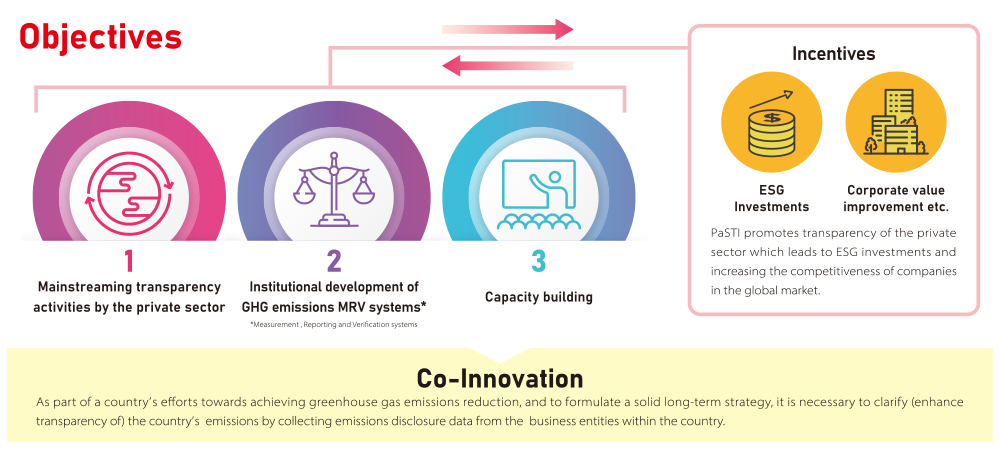
(Source: MOEJ, PaSTI website)
Hosting an International Workshop
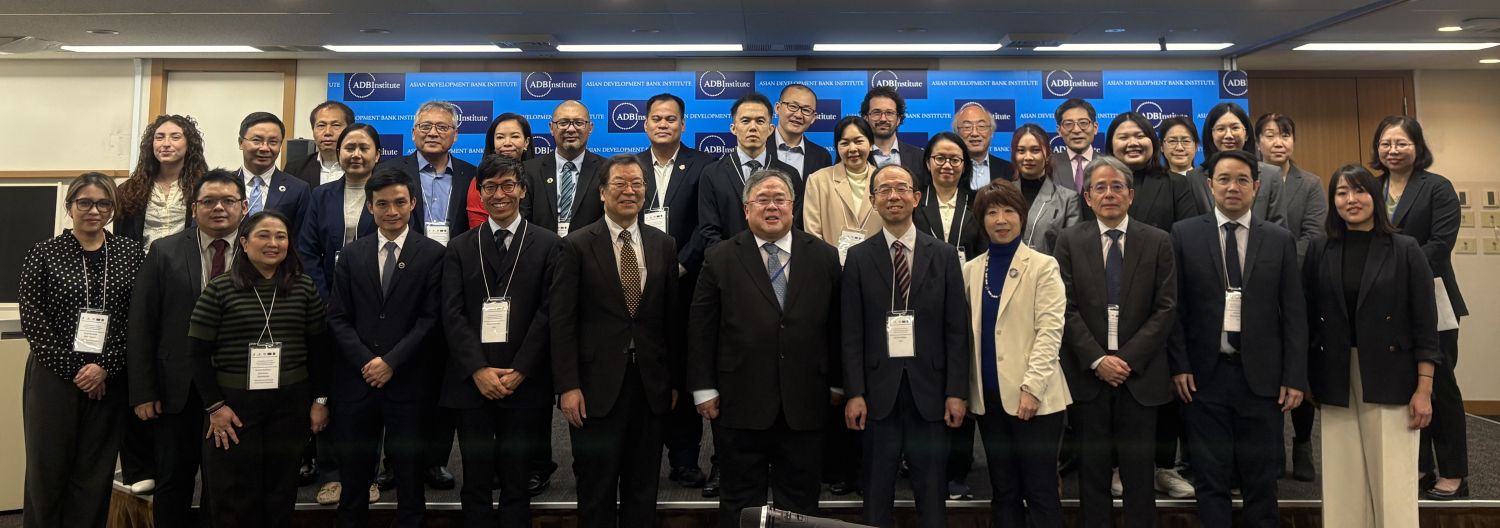
MOEJ, ADBI, and the ADB co-hosted a hybrid workshop on February 25–26, 2026, to facilitate practical dialogue aimed at strengthening corporate-level GHG emissions calculation, reporting, and disclosure within the ASEAN region.
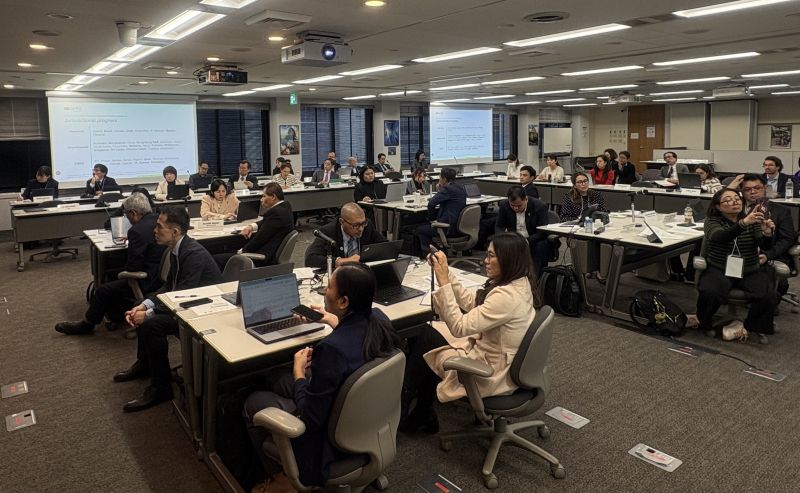
Professor Shirai of Keio University and ADBI advisors delivered keynote speeches, while the Financial Services Agency (FSA) introduced Japan’s domestic measures regarding information disclosure, and MOEJ presented Japan’s international support programs, such as the Partnership to Strengthen Transparency for co-Innovation (PaSTI). Furthermore, the panel discussion addressed how to harmonize GHG emissions measurement, reporting, and verification (MRV) as an environmental regulation with non-financial information disclosure in accordance with the International Sustainability Standards Board (ISSB) to accelerate corporate decarbonization. Subsequently, participants from national environment ministries and financial regulatory authorities reported on domestic progress regarding the measurement, reporting, and disclosure of corporate-level GHG emissions.
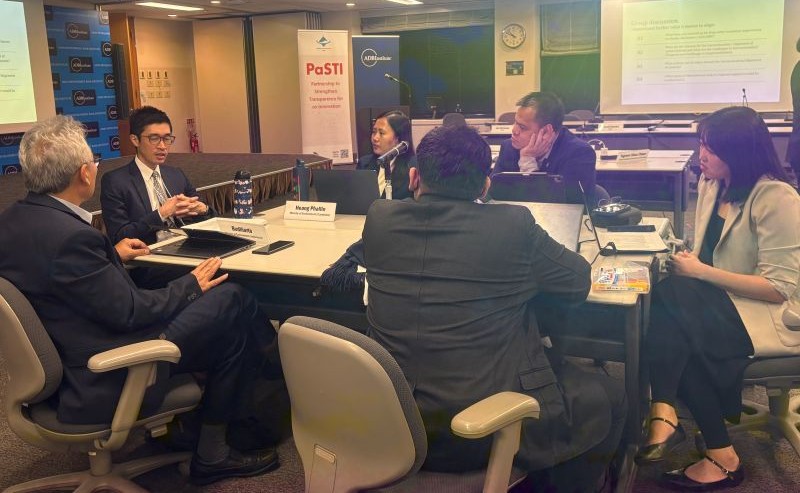
On the second day, participants divided into groups comprising environmental authorities and financial authorities to exchange views on national disclosure frameworks and reporting systems aimed at reducing the burden on companies regarding GHG emissions reporting and disclosure. In the final session, each group presented the outcomes of their discussions, sharing the key challenges and needs in both the environmental and financial sectors.
Through this workshop, a shared understanding was confirmed that continuing cross-ministerial dialogue is essential to harmonize calculation and reporting systems in the environmental sector with information disclosure systems.
Network Building and Support for Organizing International Workshops
As the secretariat for PaSTI, the OECC provided support for the event. We worked on planning the program and inviting participants to managing operations on the day of the event in consultation with MOEJ and the co-organizers, ADBI and ADB. This “From beginning to end”effort, which involved inviting practitioners from various national governments to discuss a single topic and synthesizing their discussions was made possible by the our commitment to project implementation and its extensive expertise in organizing international conferences. Moving forward, we will continue to enhance OECC’s experience and expertise to build networks among stakeholders and manage international conferences.