2026.09.30
Supporting the Development of Life-Cycle Management of Fluorocarbons in 13 Pacific Island Countries
Surveys and Policy Recommendations on Fluorocarbons under a UNEP Project
Protecting the ozone layer and addressing climate change require fluorocarbons used as refrigerants in air conditioners, refrigerators, and freezers to be recovered from air conditioners, refrigerators, and freezers when such equipment is disposed of, and then appropriately reused or treated. In many developing countries, however, fluorocarbons are rarely recovered or treated, and the knowledge and experience needed to establish effective systems remain limited. To address this issue, the United Nations Environment Programme (UNEP) is implementing a project in 13 Pacific Island countries to explore Life-cycle Refrigerant Management (LRM) approaches suited to the circumstances of each country. OECC is responsible for surveying legal frameworks and implementation arrangements, analyzing challenges, and developing policy recommendations.
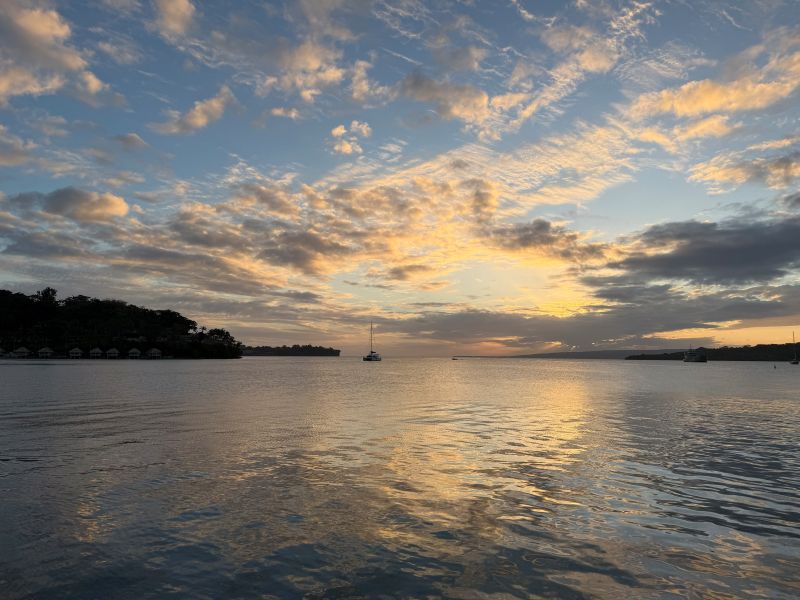
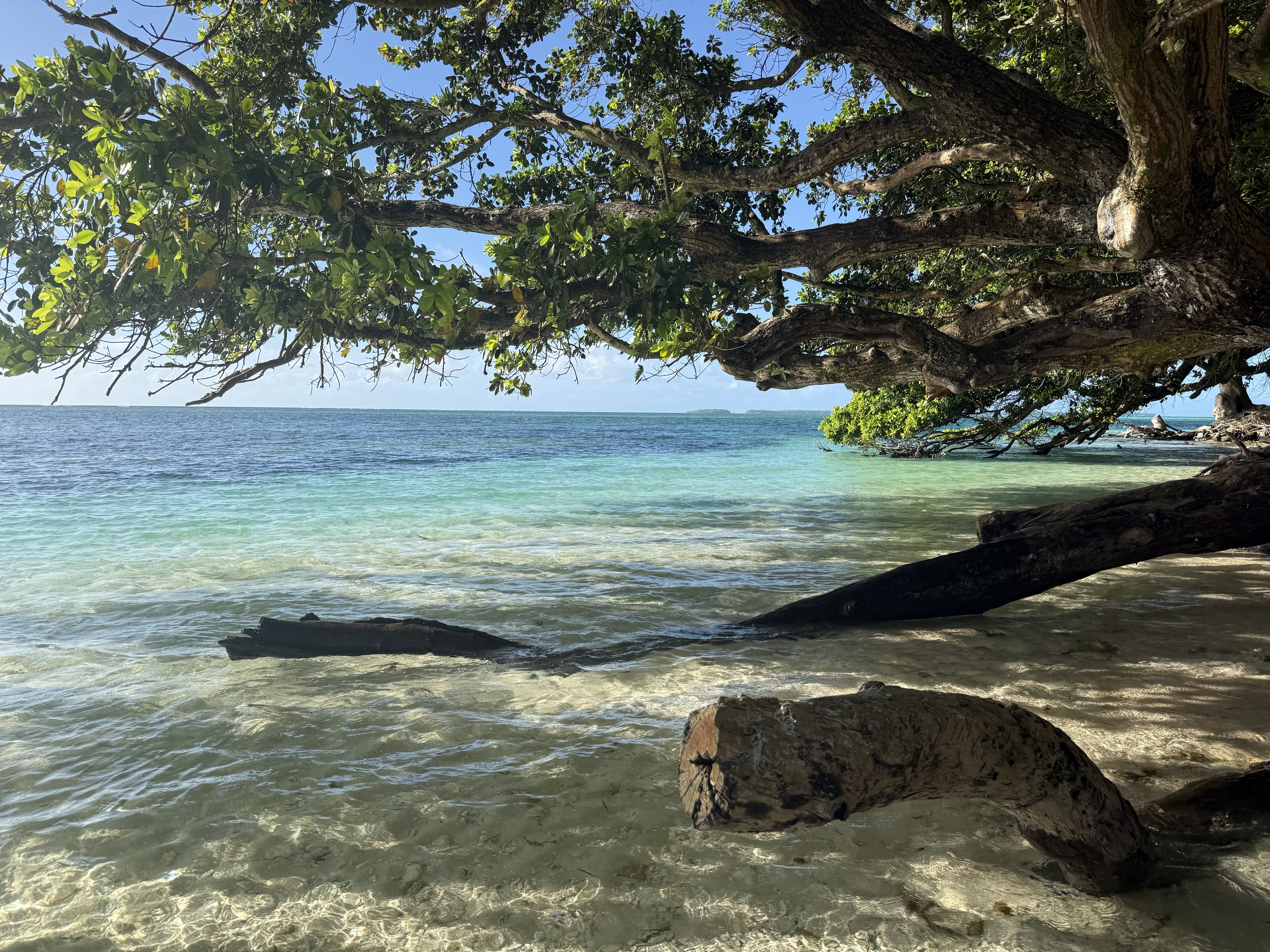
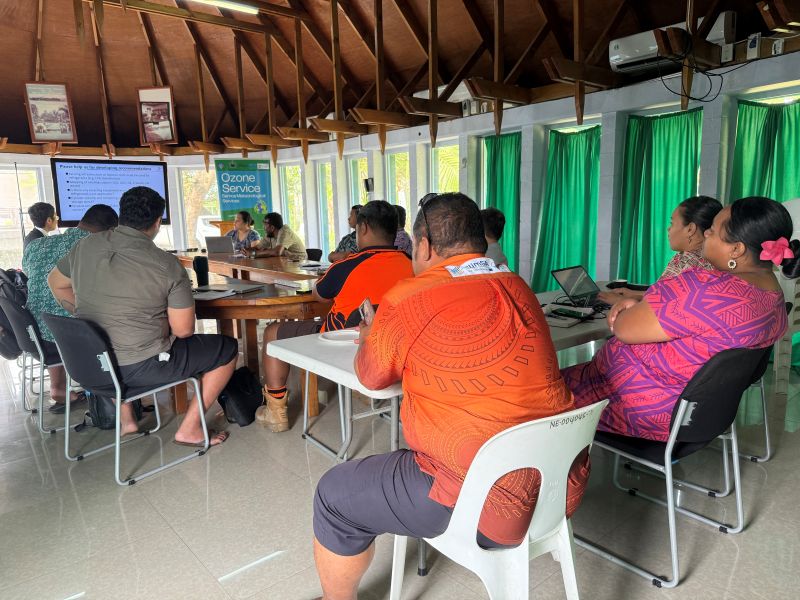
As part of the survey, the project team visited five countries, the Marshall Islands, Palau, Fiji, Samoa, and Vanuatu, in two separate missions. Through discussions with government agencies and concerned stakeholders, as well as participation in workshops, the team gained an understanding of conditions in each country. Although these countries are all located in the Pacific region, they differ significantly in culture, food, language, and local circumstances. At the same time, the survey revealed challenges that they share in advancing LRM.
One such challenge is the transportation of recovered refrigerants. During the missions, simply traveling from Tokyo to the capital cities of the countries required the use of connecting flights and so-called island-hopping, for a total of 16 flights. If even moving people between capitals is this complex, it is easy to appreciate how difficult it can be to transport recovered fluorocarbons properly and deliver them to a treatment facility.
The Pacific islands do not have facilities for reclaiming or destroying fluorocarbons, so recovered fluorocarbons must be treated outside the countries where they are collected. It is therefore necessary to consider the entire process, including the transportation route and the treatment destination, in accordance with the Basel Convention on the international movement of hazardous waste and the Vienna Convention. This is a comprehensive challenge involving not only recovery technologies, but also transportation systems and institutional design.
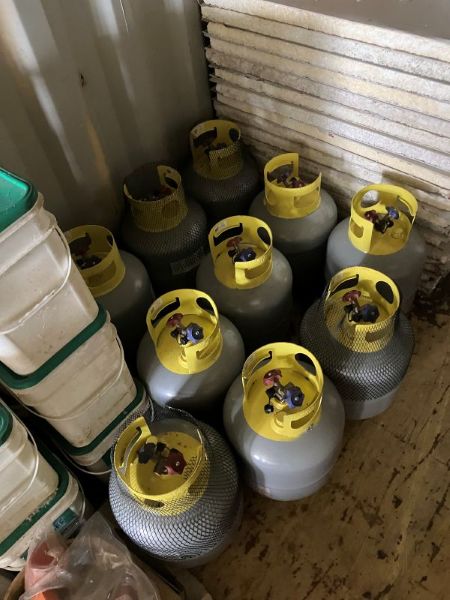
Because no fluorocarbons treatment facilities are available locally,
arrangements for overseas transportation must be considered after recovery.
Managing Fluorocarbons in Air Conditioning During the Transition While Supporting Tourism
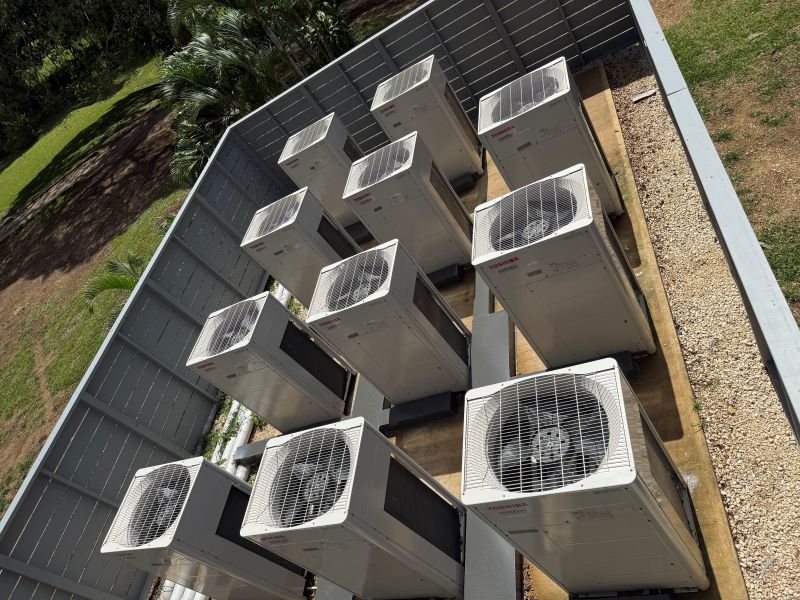
The visits also renewed the project team’s awareness of an important question: why are fluorocarbons used in these countries? In the Pacific region, air-conditioning equipment represents one of the main applications of fluorocarbons as refrigerants. Air conditioning supports daily life in tropical regions and in places such as restaurants, and it is indispensable to tourism facilities, including hotels and resorts. Tourism is a key industry in many Pacific Island countries, so maintaining an environment in which this equipment can be used reliably is also important to local economies. As members of the project team stayed in hotels during the missions and benefited from air conditioning themselves, the experience provided an opportunity to view fluorocarbon management as an issue that also directly concerns them.
Looking Ahead
LRMis not only a means of protecting the ozone layer and addressing climate change. It is also an approach that supports national economies and people’s livelihoods. OECC will continue working with UNEP and the governments of the participating countries to promote sustainable LRM in the Pacific region.